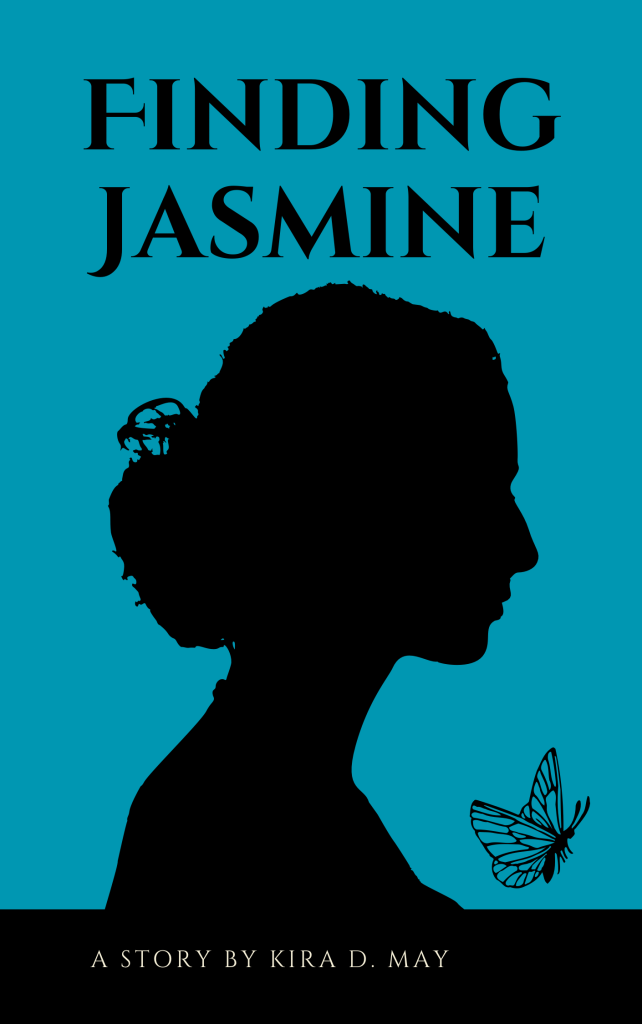
by Kira D. May 8/13/2024 Genre: Prose, Psychological Fiction, Debut novel, Based on a true story
Chapter 1
Saturday, September 3, 1988
My memories overwhelm me. They flash before my eyes, brief and fast images from my childhood. I wish I could stop seeing them. The only way to eliminate them is to write everything down, but my hand can’t scribble them fast enough.
Whenever I lie down and close my eyes, I see those images or hear my baby screaming. When I get up and walk to his room, I often find him asleep. Maybe I’m going crazy? I hope not. I walk to my bed and lie down again. As I try to relax, I see everything bright and clear, like I’m still there — that lonely child. And no one could hear my begging voice.
Baby Christian woke up and crying. I guess I’m done writing for today.
Wednesday, August 19, 1988.
Every time I sit down to write in my journal, I have to check the date. Otherwise, I don’t remember. I don’t know much anymore. I have to pause and think about the last time I ate or drank water.
I feel like I’m stuck in a dark cave that isolated me from the rest of the world. Everything happens outside these walls passes without my slightest interest. Life out there seems foreign, bold, and vibrant. I’m just an outsider, a ghost, like before when I was a child.
Whatever left of me lives in this careful, orderly seclusion. Most of the days I run around in flannel pajamas with disheveled hair. It seems that I always run, continuously in a hurry. In the early mornings, my baby serves the purpose of an alarm clock. He screams. Oh God, his scream is so loud that sometimes it sends my heart into panic mode.
In my daily routine, I only have a few seconds to wash my face and apply lotion, and there is no more time for bubble baths. I try to beat time even in a shower, and then I rush back to my baby, who continually cries and demands to be held. He chooses only me. Around everyone else, he acts petrified. I know I’m complaining, but only in my journal.
God, I feel like I’m going to explode someday. On the surface, everything is quiet, regular, and as expected.
At six, Edward came home. By that time, I had managed to slip into a silk dress and mastered a decent hairdo with my trembling hands. We sat down for a family dinner with candlelight, as usual, while Christian was sleeping. Edward asked me about my day and how I was doing. I wondered why our conversation felt like an interrogation.
Should I tell him about that headache that never goes away? I considered.
Probably not.
Maybe I should tell him about Christian screaming for two straight hours.
No, rather not.
His eyes look tired after long days with his patients.
Why do you think my heart is always racing? Is it normal, Edward? Maybe, as a cardiologist, he will find it abnormal.
On the other hand, thinking about this drains all my energy. Besides, I don’t want to sound like I’m nagging.
“I’m fine, I’m doing great,” I told him, smiling and lowering my tired eyelids.
He said we should hire help. That was the moment when everything froze. My failure is too apparent. Even he, the busiest person on the planet, noticed.
“We have Rhonda,” I told him, gathering the last drops of my strength.
“Rhonda cooks and cleans,” he said. “I’m talking about hiring someone to help you with our son.”
Nice way to say that I’m doing poorly. That I’m failing at everything and most importantly, not being a good mother. So, he noticed that too. Oh, God. I need to do something about it. I ignored his penetrating eyes. Looking down at the wooden floor, I felt my fingers tremble. Shortly, after my lower eyelid under the left eye began to tremble. Maybe that’s how facial tics start.
“I’m fine. I don’t need help,” I said, hiding my hands on my knees. “I’m his mother, and he’s my responsibility.”
“Sounds like you already made up your mind,” he reflected aloud and changed the subject. He began talking about his patients and the fascinating human heart. His stories keep me closer to the outside world, and most importantly, I take a very passive role in our conversation, just listening and nodding. I am grateful to Edward that I don’t have to say much. Emotionally drained, I probably wouldn’t be able to make a decent sentence.
After dinner, he played the piano as usual. He thinks classical music will improve my stamina. From an armchair, I listened to the beautiful melancholic music and watched his long fingers jump all over the keyboard.
Today, he played Beethoven’s Moonlight. The soft music of pure nostalgia filled my eyes with tears. It reminded me about Jack and how it hurts me. Please, stop that music, I wanted to scream, but I knew without a doubt that Edward would think that I was mentally ill.
My eyes shifted to the mirror, and I stared at my reflection inside a white oval frame. I started to the point that I no longer heard any music or voices. I discovered this method in my childhood, and it never failed me.
From a mirror, a stranger with pale skin stared back at me. Who are you? Where is the real Jasmine? I see she’s this worn-out, pathetic person. This stiff woman with a blank expression in her colorless eyes and pain curled up on her shoulders, struggling to be a good mother to her only son. This broken, unaffectionate person—is she the real Jasmine?
Some say to know someone’s genuine nature, you have to put that person in the most challenging circumstances and watch their true self emerge. They forget that extreme situations break people and turn them into dysfunctional individuals. Is being dysfunctional the true self?
Thinking how much I regressed, I want to weep.
Oh, my baby woke up screaming. I have to go. Oh, heavens, I’m so exhausted.
(See Part 2: https://taia-books.com/2024/08/23/finding-jasmine-2/)
All rights reserved in all media. No part of this book may be used or reproduced without written permission, except brief quotations used in articles or reviews.
The moral right of Kira D. May as the author of this work has been asserted by her in accordance with the Copyright, Designs, and Patent Act of 1988.
This is a work of fiction. All names, characters, locales, and incidents are products of author’s imagination and any resemblance to actual people, places or events are coincidental or fictionalized.
 TAIA BOOKS
Leave a comment